


Have you ever considered a non-holiday holiday?
The best off-peak holiday travel deals actually show up in the quiet weeks most people skip — the stretch between Thanksgiving and Christmas, and the calm right after New Year’s. Demand drops, prices fall, and suddenly the trip that felt out of reach (the cozy mountain cabin, the warm beach, even Paris in January) is not only possible, it’s affordable.
But here’s a little industry secret: the travel world has quiet pockets in this exact window.
The weeks between Thanksgiving and Christmas, and the week right after New Year’s, are considered “dead weeks.” Demand falls off a cliff. And in travel, low demand = lower prices. It’s one of the best times all year to grab a hotel upgrade, book a last-minute getaway, or fly somewhere you’d normally consider “too expensive.”
If you’ve got flexibility in your plans — or a family that likes the idea of doing something different this year — this is your moment. You can trade chaos for cozy. You can skip the mall and watch sunrise on a nearly empty beach. You can wander a usually packed museum without waiting in a single line.
All you have to do is be willing to travel when almost no one else is.

Off-Peak Holiday Travel Deals You Can Grab in December and January
1. Go off-peak (and time it right)
The most expensive travel days of the season are the obvious ones: the day before Thanksgiving, the Sunday after Thanksgiving, the few days right before Christmas, and the first days of January when everyone is flying home.
Avoid those.
Instead, look at:
- Early December (after Thanksgiving weekend and before December 20-ish)
- Midweek dates between Christmas and New Year’s, if you’re not tied to a specific celebration
- The first full week of January, after January 2
Prices can drop dramatically — sometimes 25% to 50% off normal peak rates — simply because you’re traveling when everyone else is “busy.”
Small tweak, big savings.
2. Use destination choice to your advantage
Off-peak doesn’t just apply to dates. It applies to where you go.
Tim Leffel, author of The World’s Cheapest Destinations, offers this smart strategy: cities that rely on conventions and conferences often have huge swings in hotel rates. When there’s no big event in town, those hotel rooms still have to be filled.
That means places like Orlando or Las Vegas can suddenly become surprisingly affordable in early December or early January. You’ll see deals pop up for big-name hotels that would normally be booked solid.
Bonus: those cities are built for visitors. Fewer crowds means shorter lines for attractions, easier dinner reservations, and less “hurry up and wait.”
3. Rethink your idea of “winter beach”
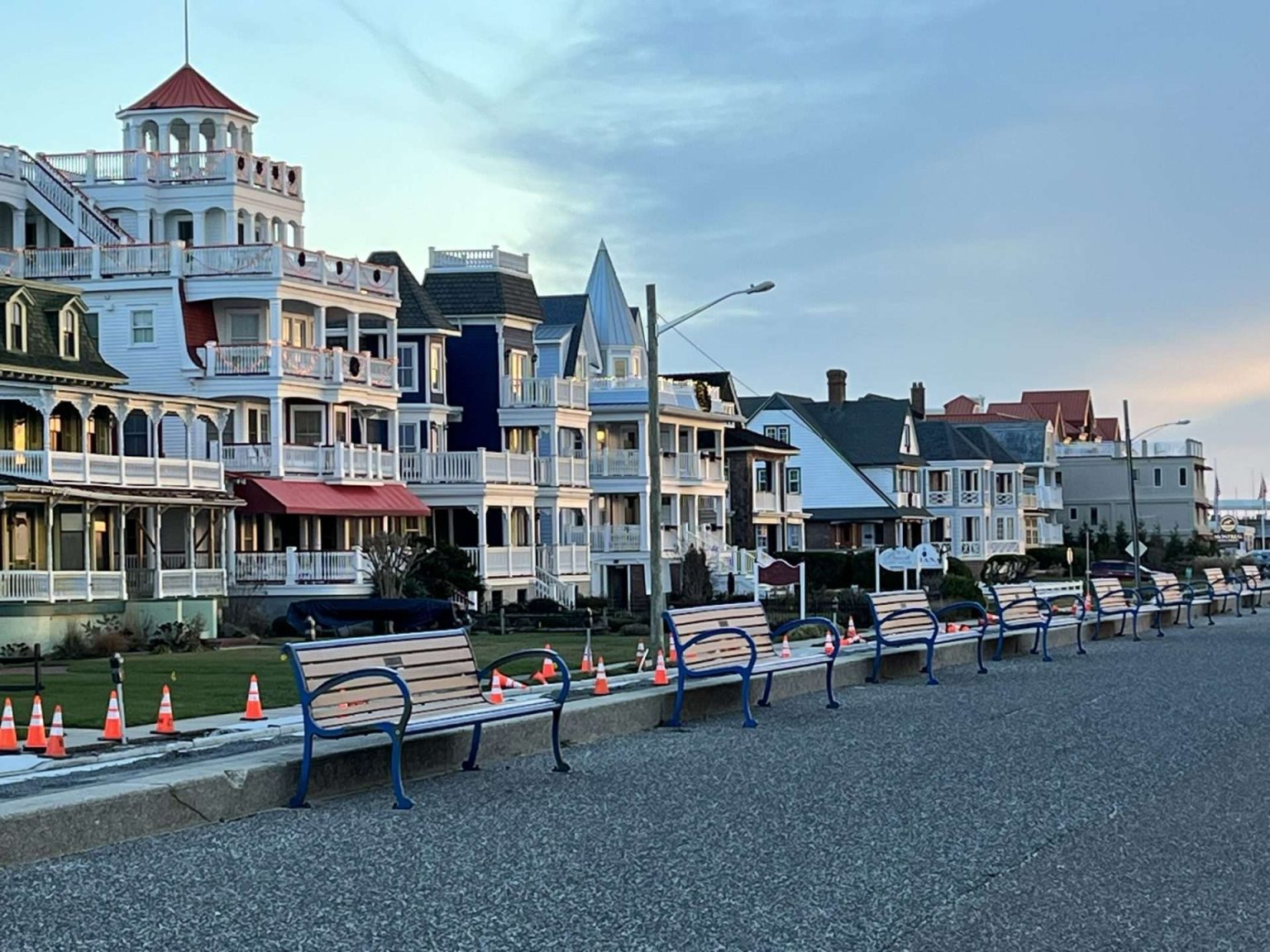
Victorian homes line the peaceful winter beach in Cape May, New Jersey / by Melody Moser
Florida is great, of course, but don’t stop there. Warm(er) coastal escapes also exist along the Georgia and Texas shorelines, often at a lower price point and with a more relaxed vibe.
Examples:
- Tybee Island, near Savannah, has that laid-back, salt-air “beach town with history” feel.
- Galveston, on the Texas coast, often has hotel rooms in November and December that are still under $100/night — and you still get the Gulf breeze, Victorian architecture, seafood, and long walks by the water without summer crowds.
- Victorian Cape May, New Jersey, has a wonderful off-season holiday vibe. Read the full story I wrote for Rovology here.
It’s not a spring-break scene. It’s quiet, a little soulful, and a lot more affordable.
If your dream version of the holidays is “less wrapping paper, more ocean,” this is the moment.
4. Get creative with airfare (this is where people overpay)
Most people plug in their home airport, their destination, and round-trip dates… and then just take whatever price pops up.
You can do better.
Try this:
- Search two one-way tickets instead of round-trip. Sometimes two one-ways on different airlines are noticeably cheaper than a basic round-trip on one carrier.
- Check nearby airports. Flying into an alternate airport (and then taking a train, bus, or rental car) can shave a surprising amount off the cost — especially in cities with multiple airports within an hour or two.
- Mix cash and miles. If you’ve been hoarding points, this is a smart time to use them because cash fares drop and points stretch further.
One more tip from frequent flyers: some people swear that early morning is the best time to look for deals because airlines update availability overnight. Is it a guarantee? No. Does it give you first pick of freshly released seats and lower fares before everyone else grabs them? Sometimes. It’s worth a pre-coffee browse.
5. Consider a vacation rental instead of a resort
Let’s talk about ski towns and holiday destinations that usually cost a fortune.
If you’re willing to stay just outside the “it” area — say, a 15-minute drive instead of right on the slope or in the old-town square — vacation rentals can be dramatically cheaper than resort hotels.
Why rentals can be a win:
- You get more space (which matters for families, teens, or friend groups).
- You’re not sharing walls with strangers having loud hallway conversations at midnight.
- You get a kitchen. Even doing simple breakfasts and one dinner in can take the sting out of constant restaurant spending.
- You can actually hang out together, instead of scattering into separate hotel rooms.
This is especially appealing for multi-generational trips — grandparents, adult kids, teenagers, everyone under one roof, with enough living room to sit around in pajamas and not feel trapped.
6. Don’t rule out Europe
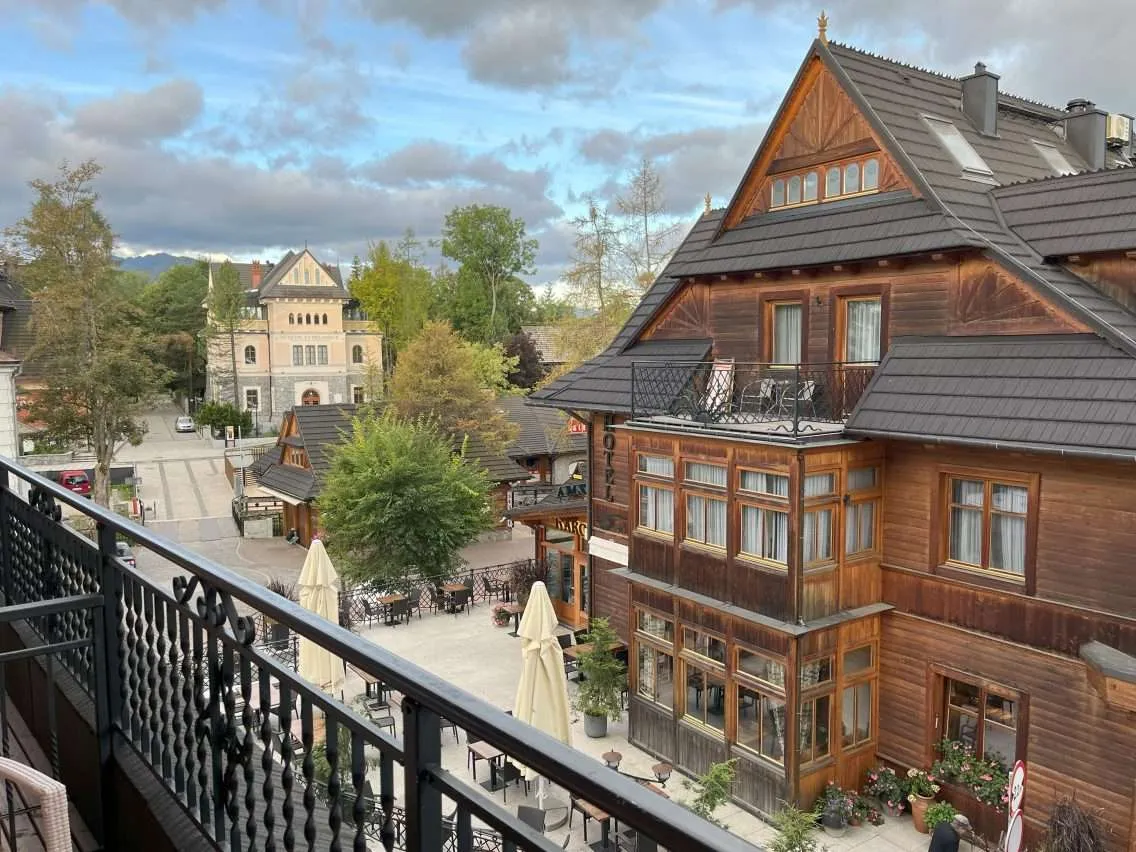
Balcony view of traditional wooden architecture and quiet streets in Zakopane, Poland by Melody Moser
This is the one people are always surprised by.
We tend to think of Europe as a summer trip: cafés in Paris, gelato in Rome, London in a light rain with flowers in bloom.
But winter has its own magic — and a much better price tag. And Europe in winter isn’t just Paris and Rome. Mountain towns like Zakopane in southern Poland feel wild and romantic in the cold months — and they’re still affordable. I’ve written about why Zakopane belongs on your travel list, and it’s exactly the kind of under-the-radar trip most travelers skip.
Roundtrip flights to major European cities in the off-season can be significantly cheaper than in July and August. And once you land? You’re not fighting through the huge summer crowds.
That means:
- Short or no lines for places like the Louvre.
- St. Peter’s Basilica without standing in the sun forever.
- Cozy pubs, winter markets, candlelight, and the soft “locals living their real lives” version of the city instead of “everyone on Instagram is here right now.”
It’s a completely different experience. Quieter. Slower. Honestly, more romantic.
And if you go in early December or right after New Year’s, you’re walking straight into shoulder-season pricing.
7. Final Thought: Redefine “holiday”
Traveling during the holidays doesn’t have to mean flying on December 24 with half the country and paying for the privilege.
It can mean:
- An early-December escape to somewhere warm before the real chaos starts.
- A slow, lantern-lit European city in January instead of a loud New Year’s party.
- A long weekend in a rental house with people you actually like, instead of a house full of stress.
Don’t be afraid of traveling during the season. If you know when and where to look, the “off” weeks around the holidays can give you the best gift of all: space.